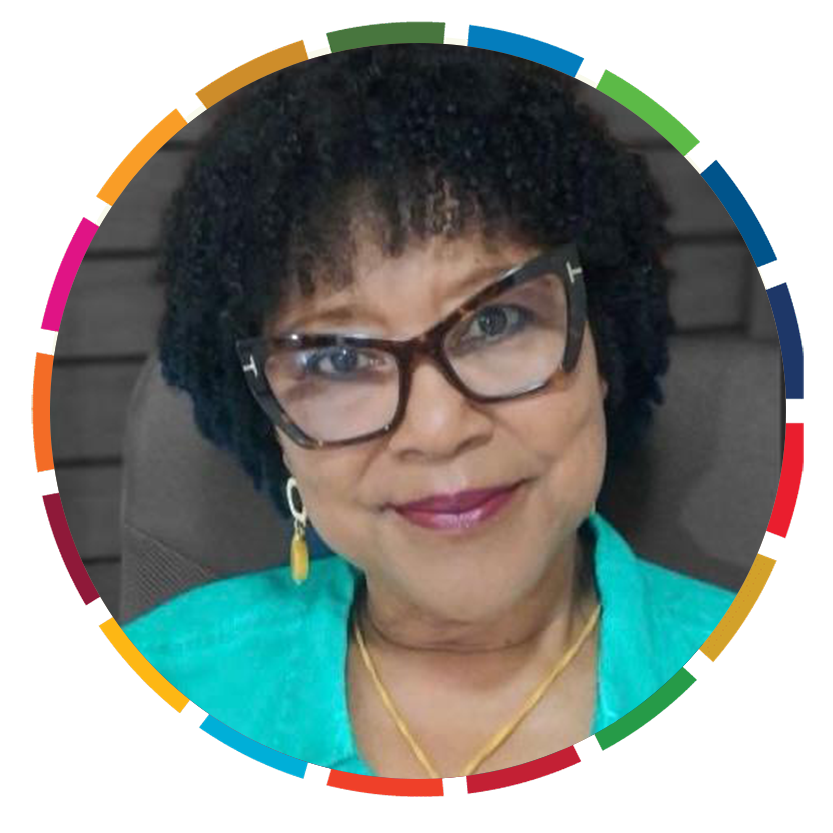
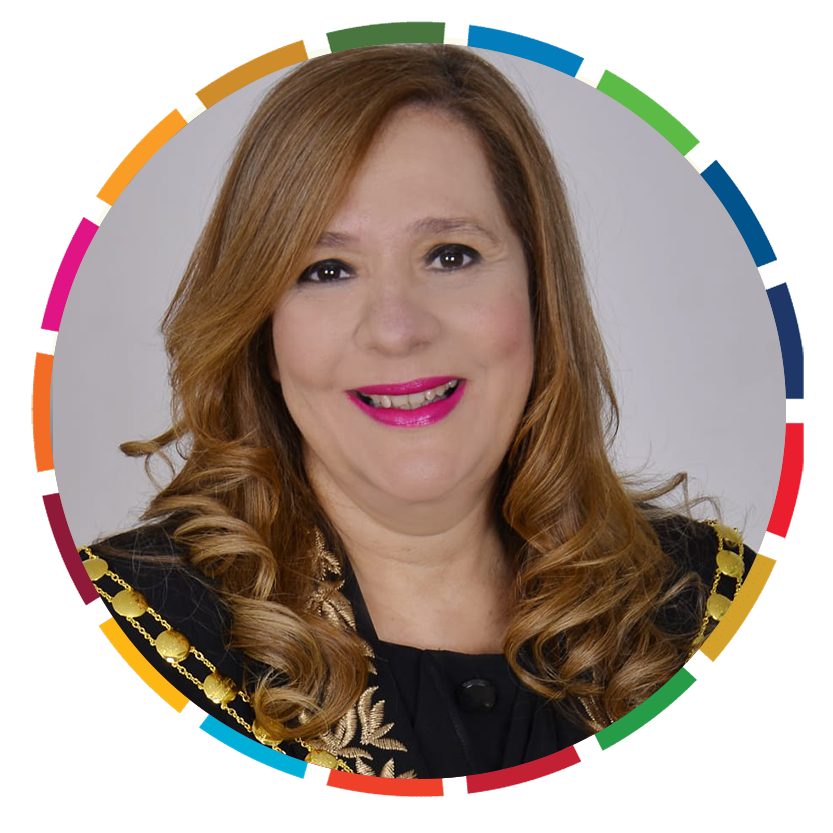
Dulce Maria Pereira, architect, professor, and researcher at the Federal University of Ouro Preto (UFOP), coordinator of the Environmental Education and Research Laboratory (LEA: AUEPAS) at the Federal University of Ouro Preto (UFOP). She specialized in environmental education and public policy diplomacy, post-graduated in engineering and material sciences and law and development. Dulce is dedicated to a second doctorate in connected history, at the Federal University of Maranhão. At present Pereira is a visiting professor and researcher at Huma/UCT in South Africa.
Before coming to South Africa as a fellow at HUMA/UCT, Pereira served at the federal level, with the full delegation from UFOP, the government of President Luis Inácio Lula da Silva, at the Ministry of Women, where she held the positions of Ministerial Cabinet Advisor, Chief of Staff, and Coordinator of the International Relations Department. In these positions, she technically coordinated the first G20 Women’s group, the Brazilian participation in the first Women´s BRICS meeting, presided over by South Africa, and the Mercosur Women's meetings, presided over by Brazil.
Afro-eco-feminist and activist of the Unified Black Movement (MNU) of Brazil and of the Observatório Feminista, she is the mother of two young men. She is also a Columnist at the digital newspaper Congresso em Foco and serves on the Editorial Council of the online and printed magazine XAPURI.
In the 80s and 90s, she worked in countries such as Nicaragua and El Salvador during the post-war recovery. In Martinique, she researched the process of precaution and prevention of risks linked to tornadoes and other environmentally impactful phenomena. In South Africa, she joined the cooperation to support the new government transition post-apartheid.
Pereira has been called to join scientific teams working on processes of conflict, environmental crimes, and environmental disasters, such as Katrina, Bacia do Rio Doce, and Brumadinho. Researching states and corporations' responsibilities in territories impacted by mining, she explores the history of mining connections between South Africa and Brazil in the context of the South Atlantic and global geopolitics.
She delves as a researcher into territories under duress, processes of crisis, and withdrawal of socio-environmental, economic, and cultural rights in territories pressured by the action of the states and corporations, identifying the processes and socio-environmental damages, searching for alternatives for reparation and re-existence in the territories.
At the end of the late '80s and early '90s, she was the Vice President of Anhembi Tourism and Events of the City of São Paulo during the first democratic government of the well-known mayor Luisa Erundina (Anhembi was responsible for all big events of the city, including Carnival) and was among the coordinators of the first visit of President Nelson Mandela to Brazil, in 1991. She was also an alternate for Senator for the notable former senator Eduardo Suplicy; President of the Palmares Cultural Foundation, an institution linked to the Ministry of Culture of Brazil; and the first Black ambassador of Brazil when she was the Executive Secretary of the Portuguese-Speaking Countries (CPLP).
Dulce Maria Pereira was the first public policy authority to issue titles to land for the quilombos (maroon communities in Brazil). She worked towards intensifying cooperation among the countries by promoting bilateral and multilateral programs, exchanges, and signing agreements. As Ambassador, in the role of Executive Secretary of the Portuguese-speaking countries (CPLP), she coordinated the inauguration of East Timor as a state and the installation of the government. At the institution, she operated for the establishment of peace in all the countries of the community.
She integrates several national and international networks of researchers and scientists. Among them are the Assemblea del Futuro, the Latin American and Caribbean Women Network, The Social Environmental Institute, research groups, and the Brazilian association of Black researchers. She is the author of textbooks on environmental education, including a set of e-books on contamination in cities and basins affected by dam failure and pedagogical textbooks for inclusive and ecological engineering and urban planning, as well as administration and Public Management. She is the author and co-author of articles and book chapters on environmental racism. Member of the Frente Mineira de Luta das Atingidas e dos Atingidos pela Mineração—FLAMa-MGo, of the Rio Doce Observatory.
Dulce Maria coordinates groups of scientists in the process of scientific identification of the impacts and alternatives for the exercise of citizenship in territories under duress. They identify by universal scientific methods, including the expertise of the local population, damages caused by socio-technical crimes, and major environmental, social, and cultural impacts, using methodologies she designed and tested, which articulate academic knowledge with that of the affected citizens to produce interinstitutional and multilateral reports for reparatory justice of the damages and the resumption of rights in the territories, most of which are Black and native indigenous populations of Brazil, Latin America, and the Caribbean.
Afro-eco-feminist and activist of the Unified Black Movement (MNU) of Brazil, she was active in advocating for the end of the military dictatorship in Brazil and in Latin America as a teenager and later as a university student. She was also an active supporter of the liberation movements since the late '70s. She has actively participated in the formulation of laws and concepts built in the Brazilian Congress and institutions such as the UN, OAS, BRICS, MERCOSUR, and others.
She is a member of the Rio Preto Arts and Culture Academy and has received several awards and commendations for the services paid to Latin America and to the nation, such as the title of Recognition of Abdias do Nascimento by the Pan African Institute IPEAFRO.